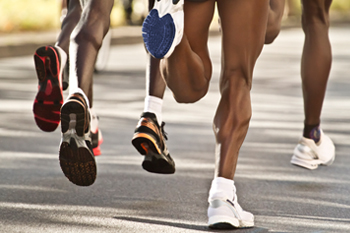
Achieving the perfect running form for marathon running starts with proper foot support and efficient movement. Choosing the best running shoes depends on terrain and the shape of your arches. Pronated feet roll inward, neutral feet maintain balanced alignment, and supinated feet roll outward, each requiring different support. A smooth foot strike, where the foot lands gently and evenly, helps reduce stress and improve endurance. Additionally, good posture and steady rhythm also play a role in preventing injury over long distances. Risk of discomfort can increase with poor footwear or improper mechanics. A podiatrist can assess your gait, recommend the right shoes, and prescribe custom orthotics to address gait issues. If you have developed foot pain from running, it is suggested that you consult a podiatrist who can provide a diagnosis and appropriate treatment.
If you are a runner, wearing the right running shoe is essential. For more information, contact Joseph Creswell, DPM from Practice. Our practitioner can provide the care you need to keep you pain-free and on your feet.
Choosing the Right Running Shoe for Your Foot Type
To increase performance and avoid the risk of injury, it is important to choose the right running shoe based on your foot type. The general design of running shoes revolves around pronation, which is how the ankle rolls from outside to inside when the foot strikes the ground.
- Neutral runners are able to choose from a wide variety of shoes, including minimalist shoes or even going barefoot.
- Runners who overpronate, or experience an over-abundance of ankle rolling, should choose shoes that provide extra motion control and stability.
- Runners who underpronate, or supinate, have feet that have high arches and lack flexibility, preventing shock absorption. They require shoes with more flexibility and cushion.
If you have any questions, please feel free to contact our office located in Wallace, ID . We offer the newest diagnostic and treatment technologies for all your foot care needs.
